Showing posts with label fiction. Show all posts

Wednesday, April 8, 2009

Fringe's Round Robin

Fringe Magazine (www.FringeMagazine.org) wants your help with our first ever Round Robin! We think you and your friends will make fabulous flash fiction writers, so give us your best shot at 26 sentences. Instructions are below. We'll be posting the results on our blog after June 15th.

1. Copy and paste the instructions and story into a fresh email/Facebook note.

2. Write the next sentence of the story below. Add your name to the byline at the bottom of the story. If you want to be emailed when your story gets posted, add your email address.

3. Tag one or more friends in the note, or forward the email to one or more buddies.

4. When the story comes to a natural end or reaches 26 sentences, email the finished product to FringeTheBlog@gmail.com by JUNE 15. We’ll give the pieces a light edit and post them, including author names, to the Fringe blog (www.thenounthatverbsyourworld.blogspot.com) under the tag “Round Robin.”

A few caveats: If a group of however many wants to tackle this, that’s fine – we don’t mind if people write more than one sentence, but do try to let the authorship to change with every sentence. You can try for something conventional, with a beginning, middle or end, or go crazy and experimental.

Story:

1. The first person to start the chain can choose from one of three initial sentences (or create your own!):
  • "Alfred did not believe in voodoo, only in himself, and the power that a well-designed business card had over lesser beings"
  • "Darcy Zicafoose, of the Washington Zicafooses, had a penchant for judo."
  • "I was never young, but I remember being young in the same way that I cannot see color but I dream of it, lush and vivid, spreading before me like a banquet."

Authors: Lizzie Stark (FringetheBlog@gmail.com)


Fringe needs a new website! Consider a $5 donation at http://www.fringemagazine.org/Donate.html

Tuesday, April 7, 2009

Fringe Contributors Rock: Prose Edition

Here's the second of a series of semi-regular posts that will showcase the fine work of Fringe contributors past. Here's what the Fringe's prose writers have been up to:
And please remember: Fringe is still in the midst of a fundraising campaign for our web redesign. We're so close -- only $299 away from success. We need to raise the funds in the next 30, so please consider a $5 or $10 donation. It'd make a big difference to a small literary journal.

Art by Zehra Khan: "Diamond (both halves)" ink on paper.

Tuesday, March 31, 2009

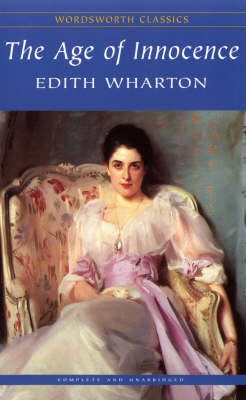
The Age of Innocence


I woke up about a month ago and realized something shocking: I hadn't read any literary fiction in more than a month.  

I drove myself to the bookstore immediately to rectify this horror, and ended up selecting The Age of Innocence by Edith Wharton, because I love modernist literature and wanted to get myself back on track with something I knew I'd love.

This novel has got everything: a scathing indictment of the heteropatriarchal order that Wharton cleverly puts in the mouth of Newland Archer, a member of said order; an exotic Italian countess; star crossed lovers and tragic self sacrifice.

Instead of ending the book with a marriage, Wharton lets Newland Archer's nuptials with the conventional May Welland fall in the middle, because there is so much more story to tell.

From a writer's perspective, the book's ending is a perfect example of a "ten years later" ending, in which the writer flashes forward by a number of years in order to provide satisfying narrative closure. And Wharton's ending really makes the book.

The final scene moved me so much that I started crying when trying to explain the meaning of the scene to my husband, and I couldn't quite tell why I was crying.  The ending wasn't sad, but somehow Wharton managed to endow those five pages with a lifetime of emotion, and that is the stuff of great writing.

Monday, March 16, 2009

podcast, anyone?


I am alone at work almost all the time. I prefer it, but it does get lonely.

When KQED is repeating the morning news and I've had my fill of the dance station playing the latest Rihanna, Britney and Lady Gaga, I turn my iPod to literary (or would it be literature?) podcasts, because nothing is more soothing than being read to. Especially if I'm listening to This American Life. Ira Glass, you make me cry, you make me laugh, you make me feel a little less alone.

TAL, aside, I've discovered that I enjoy The New Yorker fiction podcast far more than I ever did any piece of fiction in The New Yorker (save three particular short stories, feel free to leave a guess in the comments). This podcast has esteemed authors choosing a selection from the fiction archives to be read aloud and discussed with fiction editor Deborah Treisman. While the podcast introduces me to new authors, it's also a great meditation on taste, the aesthetics and mechanics of the short story (the New Yorker short story, of course, being a particular kind of short story).

Another favorite--and one no longer found on Boston's WBUR, I believe--is PRI's Selected Shorts, another short story read-along. Selected Shorts tends to feature works by well-known authors--a hilarious reading of TC Boyle "Sorry Fugu," or a darkly entertaining rendition of David Schickler's "The Smoker."

While these three podcasts have kept me pretty busy until now, I've realized I need to expand my collection. That, or pony up for the Kindle 2 which will read to me itself.

So I've subscribed to The Moth and Writers Block.

Other podcast listeners out there, share your favorites!

Saturday, January 10, 2009

Form Over Style in ESL Fiction Workshops

For the first time today I attended the monthly Silverfish Books fiction forum, a group that is advertised as an opportunity for fiction writers to share their work. There were 17 people at the forum but only three people were reading their work, and most of the other people present seemed to be also writers and not just friends dragged along for the writers' moral support. The levels of experience with writing varied from contest winners and those with a first book to novices who'd yet to volunteer to share their work.

There was no announcement of etiquette except that the moderator stressed that we were there to discuss "storytelling" and not "editing," which ruffled my feathers a bit because telling a good story isn't only plot, but also language. One control over our not discussing sentence level was that people didn't bring copies so we couldn't see the stories for ourselves. Anyway, the general process was that someone read a story, then we commented on it while the writer more or less sat in silence, which is typical of most workshops. What was different is that we bypassed the cursory positive comments before cutting our teeth on constructive criticism. The criticisms were about believability, cliches, character development, continuity, conflict, and mostly anything that wasn't word choice.

When I taught intro to creative writing, I used Janet Burroway's The Art of Fiction and encouraged the students to think about plot and style together as a package,
but in reflecting on the language criticism ban, I see the argument that developing writers who aren't writing in their native language should start by telling good stories in English and then secondly by telling them well. In Bahktin's sujet and fablua distinction, then the assumption is that with a better plot and form, better style will follow. I didn't use that approach to creative writing, but in the composition classroom my pedagogy included a belief that with better research and critical thinking processes before the drafting stages, a better-crafted draft would result.

In any case, I am going to the fiction forum again next month. And I don't think this post would be complete without a mention of what today's stories were about: bankrupt film maker makes Malaysian porn film with help of loan shark; workaholic loses wife and daughter and overcomes depression by designing Japanese toilets; and another story that can't be paraphrased, but it includes a chef cooking mushrooms that grow on his daughter. Oh, and did I mention a brief reading from Shih-Li Kow, whose first book was published December? And she's only been writing seriously for two years. Perhaps this Malaysian method of workshopping is worth a shot.

Sunday, December 28, 2008

Yay for water, nay for whimsy

Behold AQUARIUM: Fuselit's 13th issue of poetry, short fiction, artwork and musical trinkets from amongst the likes of Pomegranate’s Richard O'Brien, Steve Himmer, Chelsea Cargill and Brittle Star’s David Floyd.

So yes, it’s small and cute and oh so pretty, but do its lovingly bubble-painted pages caress innards of satisfying substance? It’s a worthy question, to which the heart warming answer is yes, yes, yes; this is a delightful collection of prose and poetry that also happens to fit neatly in the palm of one’s hand.

As you might hope to expect, the writers offer an impressive and diverse array of bite-sized slithers of word joy, varying from witty and absurd to slyly understated and sneakily sinister. You can but marvel at how this particular rabble of writers has taken the theme and run, rolled, skipped and swam with it. This really is a tiny chest of treasures just waiting to acquaint themselves with your trembling, greedy, grateful fingers.

This issue also comes with an equally dinky CD, as well as a super fun mix and match poetry booklet: the pages are cut into three, allowing the reader to mess up the various stanzas in order to create confections that the editors promise will vary from the ‘alarmingly incongruous’ to those which make ‘unexpected sense’ – and, of course, the best results will often be a heady combination of the two.

Just be sure not to spill coffee on it (or anything sticky/corrosive/stain-inducing, really).

Monday, October 13, 2008

It's the End of the World as We Know It

We're living in an increasingly consumer-driven society--Youtube is replacing network television, musicians can remix their favorite artists' music, and Time named "You" as Person of the Year in 2006.

Now, even the rules of literature are being rewritten: collaborative, web-based novels, written by a diverse group of writers (most average web-users, not writers) are becoming more and more prevalent. In 2007, Penguin launched the ground-breaking "One Million Penguins" Project, a wiki novel project in which the submission period spanned five weeks, but the wiki is still open to edits. Though some would contend that a user-driven collaborative novel cannot succeed, the form remains.

The University of Chicago has piloted a new project, EndOfThisWorld, a collaborative novel focused around the hypothetical end of the world. This novel uses voter input to determine which submissions will be published as part of the overall story. Submissions are open for the 5th chapter of the novel--check it out, and get writing!

Friday, September 19, 2008

Dickens lives again in Alexander McCall?


Back in the day, Dickens novels ran in serial form in newspapers -- and apparently he was paid by the word, one of the reasons for his legendarily lengthy novels.

Now, the British paper the Telegraph has renewed the trend. No. 1 Ladies' Detective Agency author Alexander McCall Smith is producing a novel called Cordouroy Mansions that will run for the next 20 weeks, with a new chapter -- available in audio form and written form -- each day.

I think it's a brilliant idea to bring back this old form. People are used to going to websites every day to get an update on a story, whether it's the story of a forum, a graphic novel or a blog. I know I do.

And think of the writer! Instead of spending 8 billion years writing the manuscript and getting a book deal, she or he could write in small installments. Now, thanks to the Internet, authors can get feedback from their writers immediately.

I've gotta hand it to the Telegraph and to McCall Smith -- way to take it back to the old skool.

Tuesday, September 16, 2008

Young? Adult? Literature?

My favorite comedian, the late Mitch Hedberg, once cracked: “Every book is a children’s book as long as the kid can read!”

Clearly, this statement is little more than an uninformed generalization with the singular goal of eliciting a chuckle. But, I must admit, as a card-carrying member of the “Make ‘em laugh any way you can” brigade, the silly one-liner actually gave me pause. Because, more and more, Young Adult Literature that I see as a middle school teacher is taking on content and themes that, often, is more “adult” than “young.” The ensuing internal debate has become a sort of “Chicken or The Egg” conundrum that I’ve yet to resolve.

Then, upon being invited to write for Fringe, I was referred to another column in a popular blog on YAL. And, I totally dug the snarky, “I love the 80’s”-style reviews of books from our collective childhood, having consequently been inspired to unearth lots of dusty paperbacks in my basement. And, while it’s most certainly been quite a trip to revisit these characters and stories through grown up eyes, as I read, something strikes me. Though I feel very close to these books out of nostalgia, I can’t remember ever being to relate to them as a moody, lower-middle class kid, coming of age in the neon nineties.

And so, it is in the same spirit with which I immediately removed the archaic Where The Red Fern Grows, and A Wrinkle In Time from my sixth-graders’ required reading curriculum, that I have decided--for the purposes of this column--to stick to YAL. and authors from the last two decades. But I promise—no annoying little wizards. Ever.

Be back in two weeks, with Laurie Halse Anderson’s Fever, 1793.

Tuesday, June 24, 2008

The God of Small Things


Arudhati Roy's The God of Small Things is a superb book. Roy won England's Booker Prize the year the book came out, and it's easy to see why. Her physical descriptions of people are unrivaled. The characters are round and emotionally complex.

The book is truly Fringey in its portrayal of feminism, and in the complex way it wrangles with Marxism. The work lives up to its packaging, on which John Updike proclaims, "A novel of real ambition must invent its own language, as this one does." Roy's nimble linguistic inventions recall Ulysses in their lists, nicknames, and capitalization.

A Real. Good. Read.

The book follows the travail of a family in Kerala, India, particularly of two fraternal twins, Estha and Rahel, alternating between a past tragedy and its ramifications in the present. The family is Christian, of a touchable caste and owns a rubber plantation, rice fields, and (to my delight) a pickle factory.

Roy lays all her cards on the table early on -- the reader knows that the book's central tragedy involves the death of the twins' cousin, a half-British girl on vacation in India from England, as well as a local worker on the property of whom the twins are fond. And yet, this knowledge, and the way in which Roy tells and retells certain events serves only to heighten the tension as the dreaded tragedy approaches.

In a meta passage in the book, in the book's present where the adult twins visit a temple to see kathakali, Roy writes, "It didn't matter that the story had begun, because kathakali discovered long ago that the secret of the Great Stories is that they have no secrets. The Great Stories are the ones you have heard and want to hear again. The ones you can enter anywhere and inhabit comfortably. They don't deceive you with thrills and trick endings. They don't surprise you with the unforseen.[...] You know how they end, yet you listen as though you don't" (218). This book lives up to the epic bar that it sets for itself.

The theme of colonialism runs gently through the book, as various characters remember and sing or recite bits of Shakespeare and other classic works.

Roy had my emotions dancing on a string until page 311. The last ten pages of her writing didn't resolve the plot or the emotional wounds she had opened -- she breaks a certain taboo in these pages, which is not in itself a bad thing, but it didn't feel rooted in character so much as an author's ploy to help one storyline end.

Overall, it's a wonderful, complex, juicy, can't-put-it-down, linguistically creative, politically savvy novel. Oh yeah. And besides writing this novel, Arundhati Roy happens to be pretty cool.

Friday, May 9, 2008

The House on Fortune Street

Book news! Margot Livesey, who made an appearance on our 25 Books Project for her Eva Moves the Furniture, has a new novel out, called The House on Fortune Street. I was able to see her read from it and bought the book at her reading Tuesday at Porter Square Books in Somerville, MA. It was nice to have something weighty and yet fast-paced for my 20+ hour flight to Korea yesterday. Sort of four novellas that add up to a very full novel, and which elicit a lot of reflection on the characters and the way lives are intertwined. Highly recommended.

Sunday, March 16, 2008

Unaccustomed Earth, by Jhumpa Lahiri

So, last week I read an advance copy of the upcoming Jhumpa Lahiri novel. This isn't any kind of formal review, but here's what I thought:

Three of the four best stories you could have found in The New Yorker, including the best one, "Hell-Heaven," which, after reading twice and hearing read once, I'm starting to think may be my favorite story of hers, right up there with "A Temporary Matter." The fourth is the title story.

The book, or at least the advance copy, is broken into two parts. The second part is three linked stories starting with one from TNY. Unfortunately, that one was by the far the strongest, and the rest of the section didn't feel finished to me. Maybe it wasn't. Maybe she was still working on revisions.

I'd put this book between The Namesake (which I think is more an extremely long short story than a novel, and a story that could have just been a regularly long short story) and Interpreter of Maladies (which I loved and which has one of the all time great titles). It's good but not a classic.

Speaking of classics, and as an addendum to this post, check this out: http://www.themorningnews.org/archives/reviews/lone_star_statements.php
Congrats to Fringe on their (our) list, though I can't get behind any best book list that has The Kite Runner on it. The above link is someone's compilation of one-star amazon reviews of best books.

Stay classy, San Diego.

Thursday, December 27, 2007

The Quick and The Dead: A Review by Matthew Salesses


This is the fourteenth of a many-part series written by the staff and editors of Fringe Magazine, who will be reviewing books from the Pool as part of the 25 Books Project

"Thoughts are infusorial," says Nurse Daisy, bard of Green Palms nursing home and one of the many characters populating Joy Williams's sharp-as-the-reaper's-scythe The Quick and the Dead.

This idea of the collective unconscious is in keeping with Williams' web imagery and interlocking narratives. The latter includes three motherless girls, a father who sees the ghost of his dead wife (urging him to join her in the next world), a suicidal pianist, an eight-year old who pours sand over her head, a dog murderer who suffers a Jake-Barnes-injury from a parcel bomb, a retired big-game hunter who listens to the music of air conditioners, a stroke survivor with a vivisected monkey in his head, a dog becoming increasingly paranoid, and so on.

The theme of exploration of life and death (as the title indicates) link these narratives, which take place in a fictional American desert town where the heat and landscape contribute to a certain sensitivity toward portentous images and events. As you would expect, characters die, move on, or are otherwise carried off not to return, all except protagonist and misanthrope Alice, who hasn't had her period since she found out the people she thought were her parents are really her grandparents.

My description of the network of characters does not do justice to the conceptual genius trickling through every dialogue and scene in the novel. Williams' characters talk intelligently, movingly, frighteningly, and humorously about life and death and what is or is not beyond; their thoughts, words, and actions connect in a startlingly organic way. This novel stops you in your tracks, lets you start down a new path, then stops you again. The writing exists at this consistently high level throughout—I dare any reader to stop reading after a page of back-and-forth between, say, Carter and his wife's ghost. That is what I liked most and least about the book as a whole.

There is barely room to breathe, barely time for the reader to step back and absorb what he or she has read, with all the information and wit and brilliance. Mostly this jam-packed-ness is extremely satisfying, but, ultimately, I did wish that the arc of the novel was a little more pronounced; I wanted more catharsis. The Quick and the Dead, once it gets you in its grasp, will not release you. Though, for the most part, I don't think you will want to be.

You can read about Matthew Salesses's dancing Christmas turkey at monkeybic
ycle.com, where it will be posted the day after Blame-the-Empty-Eggnog-on-Santa Day. His fiction is also available elsewhere on the web, or in MAR as the 2007 Fine Line contest winner. He is the assistant fiction editor at Redivider Journal and manager of the monsters under your bed. The monsters in the closet belong to some other guy.

Monday, December 17, 2007

Listening

Greetings from Korea (insert postcard of neon crosses lighting up the Busan skyline here). I've been thinking, probably unsurprisingly, about communication. Maybe it's that I've been reading Joy Williams's The Quick and the Dead, with its fantastically strange dialogue (review pending), or maybe it's just the whole idea of two weddings, one Korean and one American, or maybe it's that I'm revising a story about cannibals that try to stop being cannibals after a little loving contact with a group of Europeans, I don't know. But communicaton seems all the rage these days.

It's a strange thing. We read so much fiction by authors who were ostracized in their youths and who write about ostracized characters, yet it seems especially true in stories that people need people to talk to. (Unless you like those stories with only one character--I generally don't.) This doesn't necessarily mean people really get to communicate, but it means they're trying. I re-read Carver's Cathedral recently, and what struck me about the collection is how much more grace seems offered to the characters than in his earlier stories, and how that grace comes through finding someone to communicate with. I don't mean to say these stories are better--I actually prefer the earlier ones--but stories like "Fever" and "A Small, Good Thing" allow characters to connect in a way that some of the earlier stories don't. This seems to give the book a more hopeful take on life.

So, since I'm in a hopeful mood, full of Christmas spirit and eggnog, I think I'll give my cannibals a chance to connect . . . just before they eat each other. I guess what I meant to talk about was how giving your protagonist someone who will listen to him can be a great thing for fiction, but oh well. Instead, I'll recommend some recent lit mag releases (shameless plugs and more!): Redivider, MAR, Black Warrior Review's sad animal issue. Read.

Sunday, December 16, 2007

Vote for Your Favorite Books

The end of the year approaches, and with it, the closing of Fringe's 25 Books Poll.

In a nutshell, we were appalled that the New York Times top 25 list included only 2 women, one of whom was the only writer of color on the list. We vowed to make our own list, where the public could qualify to vote by reading two or more books from our pool.

We still want to hear from you about the books you read from the pool, and which novels of the last 25 years changed your outlook, inspired you, or moved you to tears.

The polls close on January 1, so you only have 2 more weeks to sound off and let us know what you think.

Click here to read about the project.

Clear here to VOTE.


Not sure what book to read next? Click here for a list of Fringe Reviews.

Tuesday, December 11, 2007

The Witch of Portobello: A Review by Julia Henderson

Okay, I know. I wrote my review of The History of Love and gushed about it, and now you're all going to think that I only write gushy reviews. But here's the thing...this book *really* made me think about who I am and where I am going, and who I want to be as a woman, a wife, a soon-to-be-mother, a daughter, and a human.

I didn't always like Paulo Coehlo's work. I tried to read The Alchemist in college and the novel just didn't do it for me. But a friend recommended Veronika Decides to Die to me while a loved one was in the hospital for depression and I was struggling to understand what might be happening in there, and ever since, Coehlo has been one of my obsessions.

When I picked up The Witch of Portobello, I didn't know quite what to expect. The synopsis said "How do we find the courage to always be true to ourselves—even if we are unsure of whom we are? That is the central question of international bestselling author Paulo Coehlo's profound new work..."

"Oh. Profound," said the skeptic in me. "We'll just see about that."

But all I know is this...the protagonist of the book, Athena, follows a winding path to enlightenment in the form of a female deity. And along the way she struggles to transcend society's expectations of her. The book is about the power that everyone has to find their own spirituality and fight against the norm. And in spite of myself, the novel made me feel able to make my own decisions, both practical and spiritual.

Coehlo uses a number of narrators to flesh out Athena's story, and these differing perspectives add a real depth to the story line. As a reader, you like some narrators and dislike others, which gives you the ability to take what you like from each and leave the rest, creating your own picture of Athena as you go.

This is a book to be read slowly and with a great deal of self-reflection. It's not a breezy beach vacation read, but it's worth the work. It's a book about soul, so get ready to grapple with your own.

Sunday, November 25, 2007

The First Page

So these days reading slush for Ploughshares and Redivider, as well as working for Fringe, I'm reading a lot of pour-water-over-my-head-to-wake-myself-back-up, clamp-jumper-cables-to-my-nipples-to-wake-me-back-up, boring-as-rust first pages. Lizzie talked about cover letters a gazillion posts ago; I thought I'd do a sequel. Here's some thoughts on the first 300 words, because really, an editor can tell from page one whether the story is going to be good or not at least 90 percent of the time. So print this out, crumple it up, and eat it--that's supposed to work for memory. Three simple rules:

1. do something new.
2. start the story arc.
3. write a brilliant sentence.

Why? Because (1) editors are sleepy and they've probably already read 20 stories by the time they get to yours, (2) the most tiring thing in the world--more tiring than Thanksgiving--is waiting for a story to begin, and (3) the editor carefully reading your opening sentences should be given a reason to continue doing so. I think if I don't get two of these three things in the first page, the monster under my bed ends up finishing the story. He likes to eat paper too, but not for memory. He likes it because "it tastes like smart."

Saturday, November 24, 2007

Lonely?

In the Prologue to Strange Pilgrims, Gabriel Garcia Marquez talks about a dream where he goes to his own funeral and sees all his friends there, but when he wants to leave with them, he's told he's the only one who can't go to the after-party. (That's right, in dreams there are always after-parties.) Well, Marquez relates this being-left-behind to expatriation and isolation. Sounds heady, I know, but as a minority and an adoptee, isolation is all up in my writing's business, so I thought I'd talk about it. I thought I'd talk about setting as well, so be prepared for the following mess.


So here's what I'm thinking. Sure, Marquez uses the unfamiliarity of the setting to isolate his characters. Why not? They're pilgrims, after all. But when they really feel isolated is when they run into things that should be familiar to them but aren't. Like when the Prez in the opening story runs into people from his home country who lie to him about their motives.


Marquez also uses the ole pathetic fallacy, where the Prez's thoughts are mirrored by the weather and place. This is okay if you're going for the magical realism thing. Yet what is it Charles Baxter says about the pathetic fallacy--that a setting can be stronger when it doesn't rely on the character? I think there's something damn good to say for that. The character should experience isolation in spite of what's around him. I'm just saying, it gets a little tiresome to see rain when someone's sad, sunshine when happy, no one around when the character feels lonely. Why not let your characters feel lonely when they probably shouldn't? It's more lonely when you're sitting next to someone and still feel alone.


Depressing and serious. I'll try for something more ridiculous in my next post, I promise. Let's just say my dreams are about dinosaurs and The Paris Review. Don't ask.

Friday, November 9, 2007

Blogging through the Culinary Underbelly

This year, for the second time in my writing life, I thought about participating in Nanowrimo.

When I did Nano before, in 2003, I wrote an awful 50,000 word genre novel. I didn't pretend it was serious work, but I was proud of the accomplishment. There's something intimidating about a novel--all that time, and all those words, namely--and in a month I had created one.

This year, working upwards of 60 hours a week, Nano just doesn't seem feasible, at least if you are also trying to get some sleep.

While I spent the last week of October stressing about logistics--Could I do it? How would I carve the time out of my schedule to write? What shape would the novel I had in mind take, and how would I link its disparate pieces together?--I allowed an even larger, scarier question to form in my mind.

Was it still the best way to get my writing out there? Is the novel, in our current society, a valuable product? Is it the best use of my time, of my reach? Hardly new ideas, I know. While we've all been talking about print culture being dead and how no one ever buys novels anymore, we're still waiting for the rise of e-books and their ilk, and we may wait a while more.

About a month ago I was sending out a piece of flash fiction to online journals. I'd worked over the piece and was fairly happy with it, but couldn't shake the feeling that it wasn't "worth" sending out to print journals. I submitted the piece to over a dozen journals and within four days it was accepted. I'm not saying this to brag, but because the experience was just so shocking. Another writer in my writers' group, Jamey Genna, shared that she's also been getting a lot of flash fiction placed recently. There seems to be an energy around the form that isn't present around longer stories. What we want to hear, what we have time and space to hear, is it changing? Where do you read, and what do you read? If what we are after as writers is to affect other people, or to get out stories out there, how do we make the novel relevant and critical, and not an artifact?

This time, these questions are coming out of my experience as a blogger. Some time back I started an anonymous food-writer blog (and subsequently became un-anonymous), and while it's audience is not large by any means I do have some readers, many of whom are also in the culinary industry. An old Emerson professor of mine Pamela Painter always stressed the importance of giving your characters a good, unusual job because the wealth of useable details was such a gift to your story. By becoming a pastry cook halfway through my course in Emerson's MFA program I essentially gifted myself. While there are many food blogs out there in the blogosphere, the voice of the chef is still rare.

As inimitable Bay Area pastry chef/writer Shuna Lydon wrote in a guest-post on writer Michael Ruhlman's blog, what it means to be a chef is still a story largely created not by us, the people in the kitchen. What really happens behind those doors is not Top Chef and it's not represented accurately. I have a unique story to tell now, and I have a voice that tells mostly true stories, and I have learned a little something along the way about appropriate content.


Chef culture finds its way into my fiction, and this Nano novel that I wanted to write would have taken chef culture as its focus. But it seemed more important to blog. To write flash fiction. The food blogging sphere is being mined for book deals. Maybe you've heard of Julie Powell's Julie and Julia, but do you know Gluten-Free Girl? Confessions of a Restaurant Whore? Conversely, authors such as Maryusa Bociurkiw, whose novel Comfort Food for Breakups is by turn both funny and wrenching, are turning to blogging as a promotional tool once the novel is published.

There are different kinds of stories we tell in blogging and in print. There is an immediacy at play in blog posts that does not translate well to the slow pace of fiction. But somehow, as I've let a part of my writing work be through blogging--and writing about the work I do, in which the voices of women and of queers are hardly well represented--is informing and changing the writer's work I do. Blogging is no longer a sidebar to my work. It is part of my writing identity. Perhaps, troublingly at times, the most important and far-reaching part.

Monday, October 22, 2007

Vote for the Best Novel of the Last 25 Years

Here at Fringe, we love novels, writers of color, and women writers (along with a whole lot of other things like feminism, culture, and judging from our blog tags, more feminism). That's why the New York Times' list of the Best 25 Novels of the Last 25 Years made us sad. (As the Guerilla Girls might say, "Hormone Imbalanced! Melanin Deficient!")

So we launched the 25 Books Project...and now we need to hear from YOU.

To vote, you must have read 2 or more books from the Pool, which we've been reviewing on this blog. For each additional book you've read, you get an additional vote, up to five.

All votes are write-in -- the only parameters are the ones set by the NYT list -- only novels by American writers written since 1981 are eligible.

Vote here soon -- the polls will close at the end of this year!