Showing posts with label Internet. Show all posts

Saturday, June 20, 2009

Virtual eclipse


This spring, a project I'd been eagerly awaiting went live. EcoArtTech, who is Cary Peppermint and Christine Nadir, released its Eclipse project on the Turbulence.org net-art site. This lil program grabs photos of U.S. national parks from Flickr, then uses real-time air quality data from airnow.gov to mess with the images.

I tried it out for the first time on the Great Smokies National Park, and despite a current air quality rating of G (that's "good" to you), the images were corrupted with pleasingly colored but alarming horizontal lines. A couple of them had a feel similar to to one of my favorite recent shirt.woot entries—in particular, a photograph of huge grey-black rocks in a slow-moving stream, the water reflecting an odd bright yellow in the original photograph, became a disorienting/abstract thing with bands of magenta and cyan interrupting the flow of water around the rocks, the flow of the shapes the rocks made.

I tried the Sumter, SC, national forest, another site dear to my heart, but got a message saying that AQI values aren't available for it right now. Wonder why.

If we could see the effects of factors like air pollution all the time, we'd become inured to them. In fact, that's probably how we manage to stand seeing the ones that are visible without hyperventilating. There's the kind of filters that keep the world manageable—and the kind that make important parts of the world visible to us. That's what this project feels like. For our emotional survival, we have to keep the first kind intact; for our long-term survival, we have to keep making more of the second kind of filter, keep finding ways to see what's subtle or painful or too big to conceptualize. Keep it up, EcoArtTech!

Thursday, May 28, 2009

Teh Internetz: #BEA09

Today kicks off Book Expo America at the Javitts Center in New York City. BEA is the largest book convention in the country, though this year is smaller than others.

This year's vibe, I'm told, is going to be somewhere between "we're effed" and "where do we go from here?" Interesting discussions will hopefully happen and break ground for new business models in publishing.

You can follow the chatter on Twitter by watching the #BEA09 hashtag.

Thursday, May 14, 2009

Teh Internetz: Browsers and Jewelry


I'm hoping that 98% of y'all won't need me to tell you this, but I'll do it anyway: STOP. USING. INTERNET EXPLORER.

OK, so the latest version of IE isn't too bad, and as far as customization goes, Microsoft's browser of choice is greatly improved from its past versions, but still. All the cool kids are using Firefox. Don't you want to be using what all the cool kids are using?

There are tons of browser options out there: IE, Chrome, Opera, Safari. But Firefox will always be my baby because of its amazing range of add-ons.

Add-ons are kind of like accessories in Final Fantasy games. Ribbons protect you from status ailments, sprint shoes help you move faster, that sort of thing. If you aren't using add-ons for Firefox, you're seriously missing out on the best you could have.

Here are some of my favorite add-ons:

Adblock Plus will get rid of all annoying ads. If you feel frisky, get the Add-Art bundle that replaces all ads with modern art.

SearchStatus will give you the Google Page Rank and Alexa Rank of every page you visit so you can tell what's an awesome site and what's lame.

There are tons of Twitter clients but I like TwitterFox for its simple, out-of-the-way appearance in my Firefox toolbar. It also makes retweeting and sharing a breeze.

HYPERWORDS. Seriously, download it now. Hyperwords allows you to highlight any text on a web page and, with a simple right click, open up a world of possibilities. Instantly Google, Wiki, share via all types of social media, translate, or compare prices. You can instantly Google Map an address, you can price compare a brand of camera, you can find out what the Russian word for "love" is. It has seriously changed my life.

Just like there's an iPhone app for everything, there is a Firefox extension for everything. I'm sure there are a billion awesome ones that I'm missing. Let us know in the comments if I passed on your do-or-die add-on.

Monday, May 4, 2009

social networking in modern times: or, what happens when your folks join facebook

A couple weeks ago, my roommate was lamenting that her mother had joined MySpace. Worsesaid my roommate, she wants to friend me. I'm going to have to reject her. I don't want to be friends with my mom on MySpace.

Years ago, employers were apt to fire people for talking about work on social networking sites such as MySpace. Today, for better or worse, your boss is more apt to be signing up for such sites. So are Mom and Dad. And underage siblings.

I keep tabs on my mother, aunts and little brothers via Facebook, and though none of them read my blog they could certainly find it with little difficulty. Yes, there are all sorts of awkward negotiations that go along with this kind of family sharing. My mother tends to ask me what Every Single Status Update means.

While my mother employs Facebook primarily for its social uses, she also uses LinkedIn, the business-oriented networking site that allows you to "tag" personal and professional connections, and recommend past employees. LinkedIn is refreshingly professional, a form of social networking that's focused on sharing less, not more. Or rather, on sharing only job-specific accomplishments.

Recently I accepted a consulting gig from an older gentleman (78, to be precise) looking to take advantage of social networking for his business. He asked if he should join LinkedIn. Then Facebook. Then Twitter. When I mentioned MySpace, he said sure, why not? If it's valuable

I almost wanted to laugh...I'd spent maybe fifteen hours with this man and knew he'd either be really frustrated by Twitter or incredibly, exhaustedly addicted to it. Then, seriously, I told him he should only join LinkedIn, and Facebook if he wanted to keep in touch with far-flung relatives or colleagues.

More and more, it will be people my age and younger inviting people past a certain age into the technological wilderness of blogging, social networking, and new-media marketing. Inasmuch as we may owe it to them (to anyone, really) to give them skills they'll find useful, what specifically should we be teaching them? Should we make the judgment over what we think they would understand and enjoy? Should we invite them to share in our own digitized lives? Who is welcome at the party?

Thursday, April 30, 2009

Teh Internetz: Bloggity Blog Blog

Writing on Teh Internetz. We all do it. You may not want to call it blogging, but whatever.

Today, I bring you profiles of some of the more ubiquitous blogging tools. You know. In case you wanna get in on some of that easy blogging money!

(Caveat: There is actually no easy blogging money.)

Speaking of, these are all free services. Unless you want to get fancy, you can run a blog on these platforms for no money at all.

1. Blogger

Blogger is the blogging platform that's owned by Google. You know it; you're looking at it right now. It's Fringe's platform of choice, and it's fairly easy peasy. If you've got a Google account (also known as a Gmail account, though it does more than Gmail, people), then you can log in to Blogger.com and get started right now. However, there's not a ton of room for fancy personalization.


2. Wordpress

A favorite among the slightly tech-savvy, Wordpress sports a clean, streamlined look that can be calibrated to your personal tastes with lots and lots of options. It started life as an open-source blogging service at Wordpress.org, but now it's got the balls of corporate backing. A favorite in my line of work because it's got some great content management systems.


3. Typepad

To my young eyes, it seems as if Typepad has been around since time began. It was one of the first blogging platforms, and it's grown a lot. Typepad is owned by the company Six Apart, which you may know as the creators of Movable Type, another of the early blogging tools. It's actually not too different from Wordpress, but in terms of branding, Typepad has always felt like...an old person's blogging platform. Something almost business-like, I mean.


4. LiveJournal

LiveJournal, or LJ, is a blogging platform used mostly by suicidal teenagers and fans of Twilight. LJ is NOT classy. It's NOT pretty. It's NOT simple to customize. And it's certainly not a blog URL you'd want printed on your Big Girl business cards. But LiveJournal is good at community building, and if you want to bitch about TV shows and hot vampires, this is the place to do it.

I can say all these horrible things about LiveJournal because I use it. In fact, I use all these different services for different blogging projects. Depending on what you want your blog to be about and how much effort you want to put in its maintenance, you can decide for yourself.

Thursday, April 16, 2009

Teh Internetz: National Poetry Month

As you should all know by now, we're smack-dab in the middle of National Poetry Month. Oh, poets! You will never make any money.

But don't worry, poor prisoners of verse. There are ways to celebrate digitally.

DailyLit, a service that will e-mail you books in manageable installments or provide them on your RSS feed, is offering free bite-sized chunks of poetry throughout April. Their Masters of Verse collection is a nice way to remind yourself of all those stanzas you had to memorize in high school. And it will give you a chance to LOL at the title choice of Good-By and Keep Cold by Robert Frost (because everyone knows the original title was STAY FROSTY).

If you're struggling to write your poetry but can't concentrate because your roommate's new girlfriend squeals like a pig and the walls in your apartment are paper-thin (for example), maybe you need a distraction-free text editor like WriteMonkey. I'm pretty sure Byron used something very similar.

And hey, do you remember the slightly scammy old Poetry.com? Well, now it's been bought by Lulu.com, the Print-On-Demand (POD) company, and they will apparently give poets money sometimes.

So April is totally not the cruelest month. I mean, it's no cakewalk, but it's certainly not the worst. So suck it up, Eliot.

Monday, April 13, 2009

But I’m a writer.

Recently, at work, my position as copywriter has morphed into something ugly: Social media pimp. Or social media whore. Maybe both.

It started innocently enough. After a few weeks on the job, wanting to prove myself, I suggested including a blog on our Web site. My boss loved the idea. They had been wanting to “do more” with the site for ages, she told me, but no one had the time. Enter Julie.

So I set up our blog. Then our Twitter page. Then our blog feed. Now, I spend my mornings trolling the Web for other blogs related to what we do. I read post after post about the use of online networking and then blog about those posts. My tweets are links to other blogs and online articles. I’m blogging and linking and Twittering, reading and referring, commenting and responding.

And I have to say, though I’m using words to do these things, it doesn’t always feel like writing.

Granted, I’m not complaining. I have a job that I enjoy in a suicide-worthy economy. My co-workers are great, and my boss treats us to lunch most days.

But. Some days I long for the kind of writing you can sink your teeth into. You know, paragraphs without links. Thoughts and sentences longer than 140 words. While I know that social media is the writing train of the future and we all have to get on board, I still have my old-lady moments — moments in which I want to slow it down and take stock of what we’re missing, and losing. Because sometimes it feels like a lot.

Perhaps that can be my new Facebook status.

Friday, April 10, 2009

Fringe contributors: 2008 Best of the Net finalists

We're happy to announce that two Fringe contributors were finalists for the 2008 Best of the Net anthology: Jehanne Dubrow, for her "Fragment from a Nonexistent Yiddish Poet" number 22, and Pattabi Seshadri, for his poem "Chairs." Two of Jehanne's poems, which appeared originally in the excellent Mezzo Cammin, were chosen for the anthology. This year's guest judge for poetry was Dorianne Laux.

You can read #22 and three more of Jehanne's poems in Fringe issue 13. Pattabi's "Chairs" plus two more poems appear in Fringe issue 11.

Best of the Net, put out by Sundress Publications, gathers fabulous fiction and poetry from online litmags and puts it all in one spot. Each year. Since 2006. Props to Erin Elizabeth Smith, managing editor and poetry coordinator. Keep it up, Sundress! And congrats to Jehanne and Pattabi.

Monday, March 16, 2009

podcast, anyone?


I am alone at work almost all the time. I prefer it, but it does get lonely.

When KQED is repeating the morning news and I've had my fill of the dance station playing the latest Rihanna, Britney and Lady Gaga, I turn my iPod to literary (or would it be literature?) podcasts, because nothing is more soothing than being read to. Especially if I'm listening to This American Life. Ira Glass, you make me cry, you make me laugh, you make me feel a little less alone.

TAL, aside, I've discovered that I enjoy The New Yorker fiction podcast far more than I ever did any piece of fiction in The New Yorker (save three particular short stories, feel free to leave a guess in the comments). This podcast has esteemed authors choosing a selection from the fiction archives to be read aloud and discussed with fiction editor Deborah Treisman. While the podcast introduces me to new authors, it's also a great meditation on taste, the aesthetics and mechanics of the short story (the New Yorker short story, of course, being a particular kind of short story).

Another favorite--and one no longer found on Boston's WBUR, I believe--is PRI's Selected Shorts, another short story read-along. Selected Shorts tends to feature works by well-known authors--a hilarious reading of TC Boyle "Sorry Fugu," or a darkly entertaining rendition of David Schickler's "The Smoker."

While these three podcasts have kept me pretty busy until now, I've realized I need to expand my collection. That, or pony up for the Kindle 2 which will read to me itself.

So I've subscribed to The Moth and Writers Block.

Other podcast listeners out there, share your favorites!

Thursday, March 12, 2009

Teh Internetz: Teh Twitter


Twitter.

Twitter, Twitter, Twitter.

What can I tell you about Twitter that hasn't already been said by online news sources, annoyingly persistent traditional media, the drinkers of Haterade, and those in the book marketing biz?

What can I say that is more poignant or true than what Twitterer extrodinarie and all-around role model to the geek Stephen Fry says about Twitter and all social media being a threat to the media as we know it?

What uses of Twitter could I point out that you couldn't easily Google on your own?

Yes, I know. It's the Next Big Thing that all the hipsters are doing, so it sucks. And it seems stupid and useless to most of you, and 140 characters (not words, characters) can't possibly help a human being communicate a successfully nuanced thought. And of course you're angry about what this all means for the future of language.

So I'm going to ignore all that. Because you can argue about all that on Facebook, which, if you recall, lots of people resisted with vigor and stubbornness when it first arrived. But I won't mention that either!

I'm going to tell you a story about the power of Twitter.

It's a cautionary tale, an urban legend that I think holds in its grip a microcosm of the human condition.

For nearly two months, I impersonated an obscure British celebrity on Twitter. Well, impersonate is a strong word. "Fucked around as" is better. You can read the tawdry details here, at a blog I'm writing with some friends who want to chronicle the awesome things we can accomplish. I listed this as an accomplishment because I reached 1,000 followers on Twitter all by just tweeting stupid jokes. I thought that was impressive at the time.

But when I deleted the account two days ago, this was the final tally.
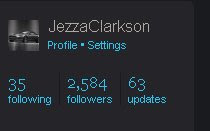


I deleted the account because, at a very simple level, dicking around online with other car enthusiasts and trading stupid jokes wasn't much fun anymore. The fun had been overshadowed by the sinking feeling that no one on Twitter understood that I was a fake, that this was all for laughs. For every @Reply I received saying "Good one, mate" I got ten asking me when my TV show would be back on the air. I tried to explain to those people that I wasn't real, but there were too many of them, and 140 characters is not a lot of space to say "Look at a bio, you twit" without sounding mean.

I eventually had to ignore all those questions or else I'd lose my mind. Then there were people who would bluster around like the worst detective in the world, trying to unmask me, even though the confession was right there if they cared to find it. One man tweeted me to say, "I went to high school with someone who knows the real Clarkson, and if you can tell me this obscure fact about him, I'll know you're not fake."

I replied, "Look, mate, maybe you should read my bio. Here's a link to it, even."

His response? "SO YOU CAN'T ANSWER THE QUESTION, CAN YOU?"

Whoa there, Sherlock. Pace yourself.

Look, I know people are, on the whole, idiots, but that idiocy seems to be multiplied on Twitter, when they're restricted to such a small space to express themselves. In the inverse fashion, brilliant people have their brilliance magnified by exactly the same format. It just goes to show.

At any rate, I came to understand that the people who didn't get it, who weren't bothered to check out simple litmus tests of fact, weren't ignorant of the internet or naive about online exchanges. I couldn't be mad at them for not following directions or taking me at my word. Now I think that they simply didn't want to know the truth, because it was more fulfilling to them to believe that I was really a man that they loved.

But I wasn't. So I ended it. I hadn't set out to deceive or trick; I had wanted to entertain, but now I see there is nothing about the Twitter platform that makes it an ideal vehicle for terribly bad comedy. Twitter should be, I now theorize, about connecting to and sharing things with people who care about the same things. It should be about being real, I guess. In whatever way that makes sense to you.

Use Twitter, or don't use Twitter. The world won't end either way, I'm sure. If you do use it, use it in a way that is representative of you and your work. Connect with people you would want to speak to if you were at the same cocktail party. Try to be nice if you're a nice person; if you're a douche, run free, my friend.

If you don't use Twitter, then that's okay too. But I would tell you not to be afraid of exploring it. There's nothing to be scared of. It's nothing as confusing as the first time you linked to something on a blog, or as difficult as the first time you played Oregon Trail.

Worst comes to worst, you can always delete yourself.


Tiny self-aggrandizing endnote:
You can follow TJ (the real TJ) on Twitter @tjdietderich.

Thursday, February 12, 2009

Teh Internetz: Writing and/or Dying


As I continue to yammer on about how to write and use the internet at the same time and how the internet can help you write instead of edit, I bring you yet another online tool in the constant battle of the Word Count.

Dr. Wicked's Write or Die is a tool that a few of my fellow WriMos used during November. The idea is simple: you type into the Write or Die box, and if you don't, you're cyber-smacked on the backs of your hands in various ways. The worst and most effective way? If your stream of words cease, the application begins deleting what you've written so far.

It's like water-boarding for writers!

Dr. Wicked, the app's creator, says:

This is aimed at anyone who wants to get writing done. It requires only that you recognize your own tendency towards self-sabotage and be willing to do something about it. If you're sick of saccharine writing advice that no one could honestly follow and you want a real method to getting work done.


I agree with this dude completely! I'm done being a pansy writer, sitting around waiting for mah muse. Give it a shot next time you're stuck or on a deadline.

Sunday, January 25, 2009

Freedom from the Known When the Known is Everything We Know


“How can I love what I am doing if I am all the time driven by ambition, trying through my work to achieve an aim, to become somebody, to have a success? An artist who is concerned with his name, with his greatness, with comparison, with fulfilling his ambition, has ceased to be an artist; he is merely a technician like everybody else."--Krishnamurti

I've been gorging on J. Krishnamurti, and applying it not only to my sense of being in the world (a solution which can be reduced in words to "pay attention," or as Ram Dass would have it, Be Here Now) but to my sense of myself as a writer, even a blogger.

As to my Internet presence, Krishnamurti adds this (from Freedom from the Known):

“I discover for myself that I depend on something—an audience, say, which will stimulate me. I derive from that audience, from addressing a large group of people, a kind of energy. And therefore I depend on that audience, on those people, whether they agree or disagree."

Why are we all online? Why all this publishing/blogging/yelling? Have I lost my way in ambition? As William Deresiewicz has it in his article in The Chronicle Review, the postmodern property is "visibility"; i.e., "look at me."

But why look at me? Because my opinion "matters." Because in a world where we've lost the respect given to true authorities, the result is everyone is an expert (Keith Kahn-Harris and David Hayes have an excellent article on the politics of Me at Open Democracy).

The result, of course, is a surge of Relativism (read Anthony Daniel's fine article in The New Criterion) and art that is reduced to utter Subjectivity (see Theodore Dalrymple's essay in the New English Review). Everyone, apparently, needs an audience.

And so everywhere I look is the Internet equivalent of the need to be seen, to be visible, to connect: Facebook, Good Reads, blog after blog, and so on. This is what Krishnamurti calls "stimulation," the kind that deadens the mind and kills real creativity as we grow dependent on others for validation, for confirmation of our opinion, for whatever reward the ego demands. He connects it with a move away from nature and towards urbanity:

“Most of us have lost touch with nature. Civilization is tending more and more towards large cities; we are becoming more and more an urban people, living in crowded apartments and having very little space even to look at the sky of an evening and morning, and therefore we are losing touch with a great deal of beauty…Having lost touch with nature we naturally tend to develop intellectual capacities. We read a great many books, go to a great many museums and concerts, watch television and have many other entertainments. We quote endlessly from other people’s ideas and think and talk a great deal about art. Why is it we depend so much upon art? Is it a form of escape, of stimulation?...Perhaps it is because you do not know how to look at all the things about you that you resort to some form of drug to stimulate you to see better.”

Naturally, I am fully included. Namasté.

Thursday, January 15, 2009

Teh Internetz: Ignoring Online Distractions


Most of my writing friends decry the internet as a huge time-waster when they should be focusing on their writing. But Cory Doctorow of BoingBoing recently wrote a column about how one can write in the age of internet distraction. (By the way, if you have taken my advice and set up a feed reader, you should add BoingBoing, as it is the repository of all that is right and wrong online.)

Here's a little snippet from the column:

The single worst piece of writing advice I ever got was to stay away from the Internet because it would only waste my time and wouldn't help my writing. This advice was wrong creatively, professionally, artistically, and personally, but I know where the writer who doled it out was coming from. Every now and again, when I see a new website, game, or service, I sense the tug of an attention black hole: a time-sink that is just waiting to fill my every discretionary moment with distraction. As a co-parenting new father who writes at least a book per year, half-a-dozen columns a month, ten or more blog posts a day, plus assorted novellas and stories and speeches, I know just how short time can be and how dangerous distraction is.

But the Internet has been very good to me. It's informed my creativity and aesthetics, it's benefited me professionally and personally, and for every moment it steals, it gives back a hundred delights. I'd no sooner give it up than I'd give up fiction or any other pleasurable vice.


It's followed by some pretty decent advice on how to get your writing done by following some simple rules. My personal Achilles heel while writing on my laptop? The bullet point about eschewing research while in the middle of writing. I get distracted so easily by Wikipediaing a fact or looking up a Google Map of a city I'm not terribly familiar with. I think it's my intense, perverted love of hard facts that tempts me so easily from fiction; I am tricked into thinking that the injection of a real fact will somehow help my fiction writing and make it more realistic. In some cases, I wish I had Wikied something before submitting my piece (who knew that India was actually ABOVE the equator?) but the bulk of my experience has been that cleaving to facts has only hampered the creative process.

At any rate, it's not the fault of the internet for distracting you any more than it's MacDonald's fault that you're fat. Just don't eat too many online Big Macs at inappropriate times, and you should be fine.

Thursday, December 4, 2008

Teh Internetz: Lessons from Winning NaNo


As I emerge into a new world where I guess we're going to get a real president and stuff, I can't help but feel nostalgic about my NaNoWriMo experience. As I shared with you weeks and weeks ago, I participated in an online push to write 50,000 words in 30 days. And I did it. Whee, confetti.

This was the first time I had done NaNo, and it was a crazy month. My days were full of hurried writing. I took my new teeny tiny laptop everywhere I went. I wrote in coffee shops, in wine bars, in grocery stores, in Union Square, and on the subway. I wrote during lunch breaks and before work and after work and on the weekends. I wrote lots and lots and lots of stuff.

Maybe 20% of what I wrote is actually usable.

The structure of NaNo is unique because you get so worked up about hitting your word count, you'll write anything. You go from day to day, trying to dig yourself out of the hole you created yesterday when you decided to watch House instead of write. You're throwing in adjectives and adverbs and flashbacks and background information just to stretch the words out. The vast majority of it? Complete crap.

But the point of NaNo isn't to write something fantastic. The point is to get in a safe zone where your creative brain is forced to produce. There is no second-guessing, no self-editing. There is only your fingers and your keyboard and no filter in between. And that is a precious thing to experience.

Imagine what we could write if we weren't worried about writing well. Imagine how freeing it would be to write without the expectation of defending your creative choices to a class of fellow students or a writing group of clove-smoking colleagues. Imagine writing something that came straight from your neural synapses, the primordial ooze of thought. Something proto-fictional. Something raw.

And yeah, okay, chances are it sucks. But for every 2,000 words of suck, there might be a glimmer, a phrase, a sentence of pure, unadulterated genius that you would have never arrived at unless you'd gone through this concentration camp approach to writing.

I may not have a great novel right now, but I do have a 50,019-word framework from which to fine tune my great novel. And that sure as heck beats writing nothing for years and years. So maybe NaNo isn't for you. But maybe locking yourself away and just forcing it to come might be the way to go for some of us.

Thursday, November 6, 2008

Teh Internetz: Teeny Tiny Laptops


This post and my next post were written far in advance and set to post automatically. As I shared last time, I am deep in the throes of NaNoWriMo and cannot be bothered by things like blogging and eating.

So as I write to you from the distant past of October 29th, when we still don't know if the election is going to have a "hiccup" or not, if Palin will suddenly grow bat wings and attack elite gay socialists, or if the war in Iraq will ever stop, I bring a sense of charming naivety.

Today I will discuss very small laptops, because I just bought one and I sort of want to gloat about it? In order to maximize my on-the-go writing time, I decided to invest in an ACUS eee PC. Mine is green, like the one pictured, weighs 2 lbs., and runs on Linux. For the ungeeky, Linux is an open-source computing platform. It's like Windows except free and crowd-created and moderated. It doesn't do everything that Windows or a Mac could do, but it is pretty nifty. And since I'll just be using this as my ultraportable, I don't need it to do much besides connect to the internet and type.

But for those writers that need more OOMPH from their mobile writing gadgets, here are some options:


    The ultra-thin, ultra-sexy Mac Book Air is pretty, but lacks the usefulness you'd like in your amazingly expensive Apple product.

    Looking slightly less hot but a better marriage prospect is the Fujitsu Lifebook.

    The Lenovo ThinkPad line consistently gets good reviews on everything from endurance to memory to battery life.

    But if you need something cheaper, take a look at what's available in Under $600 Land.

Thursday, October 30, 2008

Teh Internetz: NaNoWriMo


This year, for the first time, I will be doing NaNoWriMo. For the uninitiated, that stands for National Novel Writing Month. This year will be its 10th anniversary.

The point of NaNoWriMo is to create an online support system that challenges participants to write a 50,000 word novel in the 30 days of November. It's a grueling task that only a small percentage of participants complete, but apparently it's supposed to give you the same feeling of accomplishment as running a marathon.

Just...you know...with words instead of actual steps.

Though I've never tried doing NaNoWriMo before, here are some tips that I've been told might help when attempting to write a novel in a month. They might end up being good general writing mantras.

    1. Do not edit or censor as you type. Just barf those words onto the word processor.

    2. Make a calendar with specific word count goals for each day.

    3. Create an outline to work from so you stay focused.

    4. Procrastinate by checking British National Treasure Stephen Fry's Twitter feed every few seconds.

    5. Use NaNoWriMo.org to meet up with other NaNos in your area to bitch, mainline coffee, and participate in write-ins.


The point of writing a novel in 30 days isn't to write anything GREAT, it's just to write freely with the support of a community of writers. Good luck to any fellow NaNos out there; let's look forward to December.

Thursday, October 16, 2008

Teh Internetz: Password Protection


A few weeks ago, I nerd-laughed (which is a sort of phlegmy, halting snicker) at Sarah Palin for having her Yahoo account hacked as well as Bill O'Reilly for having his web site hacked.

Stupid, un-web savvy n00bs, I chortled. God, who uses yahoo e-mail anymore anyway?

Then, a few days later, I got totally hax0red.

A personal blog I had kept since I was 15, chronicling my every teenage honey-nut angst-morsel and drama-ridden spinach-puff, was hacked and wiped clean of all information. Sure, it wasn't as horrifying as, say, compromising government business or releasing personal contact information of hundreds of paid subscribers, but it still sucked big time. Luckily, I had a content backup system and I was able to contain the damage, but that is no excuse. I should have had a better password protection system in place.

As writers, you will hopefully be keeping digital archives of your work along with important e-mails from your (god willing) agent and/or publisher. Consider this a friendly reminder to stop using "password" as your password.

Lifehacker has a great article here about how to keep your password safe.

Bottom line:

    1. Don't answer your security questions in a clear-cut fashion; obscure the answers.

    2. Choose passwords that are complex.

    3. Use a password manager to keep track of them.


So go ahead. Change that password you've been using for 10 years. It might be annoying, but it'll make you safer in the long run.

Monday, October 13, 2008

It's the End of the World as We Know It

We're living in an increasingly consumer-driven society--Youtube is replacing network television, musicians can remix their favorite artists' music, and Time named "You" as Person of the Year in 2006.

Now, even the rules of literature are being rewritten: collaborative, web-based novels, written by a diverse group of writers (most average web-users, not writers) are becoming more and more prevalent. In 2007, Penguin launched the ground-breaking "One Million Penguins" Project, a wiki novel project in which the submission period spanned five weeks, but the wiki is still open to edits. Though some would contend that a user-driven collaborative novel cannot succeed, the form remains.

The University of Chicago has piloted a new project, EndOfThisWorld, a collaborative novel focused around the hypothetical end of the world. This novel uses voter input to determine which submissions will be published as part of the overall story. Submissions are open for the 5th chapter of the novel--check it out, and get writing!

Thursday, October 2, 2008

Teh Internetz: Feed Readers


If you're a writer...

No, scratch that, if you are ANYONE living in the world today, you must start using an RSS feed reader if you haven't already. In a nutshell, a feed reader will take the content from a web site (usually when you click on the nifty orange button with the radio waves in your toolbar) and FEED that content into an interface that is controlled by you. Feed readers enable you to view, organize, share, tag, and keep tabs on your favorite sites without checking each one every single day. It will change the way you browse, certainly. But do not be afraid.

Most people, my stubborn past self included, don't like the idea of switching to a reader for their online needs. They whine: "Oh, but I like visiting my sites! I like seeing them for myself! I like wasting time and being inefficient for hours and hours on end."

Fine. Suit yourself. But the rest of us fly honeys are going to be rocking our readers.

For writers, a reader can help you keep track of your favorite author blogs, organize news feeds, and stay on top of sites that are helping you research that next great American novel (and I say that without snark or incredibly dull patronization). For publishing folks, it can help you follow industry news and financial stuff. And here's something awesome: you can even set up feeds from job sites so you can easily scan the help wanted sections for your chosen profession. It's how I landed my gig.

And of course, there are the blogs. Millions and millions of blogs. The internet is just teeming with them. And you can follow them all, from cooking to cakes to LOLcats, on a reader.

If you want to set up an RSS feed reader for yourself, you have a lot of options. Here is a list of the top 5 as compiled by Life Hacker. I personally use Google Reader, which, if you have a Google Account, is already ready and waiting for you.

They should all take only a few minutes to set up. Then the fun begins: adding your feeds. Start right now. Click the little orange button up there. Yeah, that one in the address bar if you're using Firefox. Probably lower in the toolbar if you're using IE (we'll talk about that later). Who knows where the hell it might be on Opera. Chrome? It's probably already thought ahead for you. Anyway, give it a click. Add the Fringe blog to your reader. You'll be glad you did.

Wednesday, September 24, 2008

Savvy Context: Technology for the Literate and Literary

I don't remember life before the PC.

There. I've said it. I hate revealing it for fear of losing credibility, but the truth is fairly simple: I'm a 22 year old blogger and have always had a computer. On the other hand, you are reading the blog of a forward-thinking online literary magazine; you, at least, might not immediately peg me as a Gen Y baby or a traitor to literature. Here, my childhood steeped in floppy disks might lend me some authority. After all, who better to investigate the role of technology in the world of letters than someone who neither remembers life without a computer nor deny her lifelong devotion to literature?

I hope that my work here at Fringe will reveal something more personal about the relationship between technology and the written word. How ready is the individual (and the independent company) to accept the increasingly costly deluge of technology as a tool for the advancement of publishing? How effective are the gadgets and tech trends in the lives of the literate and literary? And what demands on the publishing and technology industries will writers, editors, and readers voice to mold a literate future?

TJ's links to sites of note in his first post inspired me, so I'm including my own list addressing the state of the literate nation. You've doubtless heard the buzz around at least a few of these; feel free to add your own and fill in blanks.

Next time: The Writing Process. Ideas or thoughts? Comment!